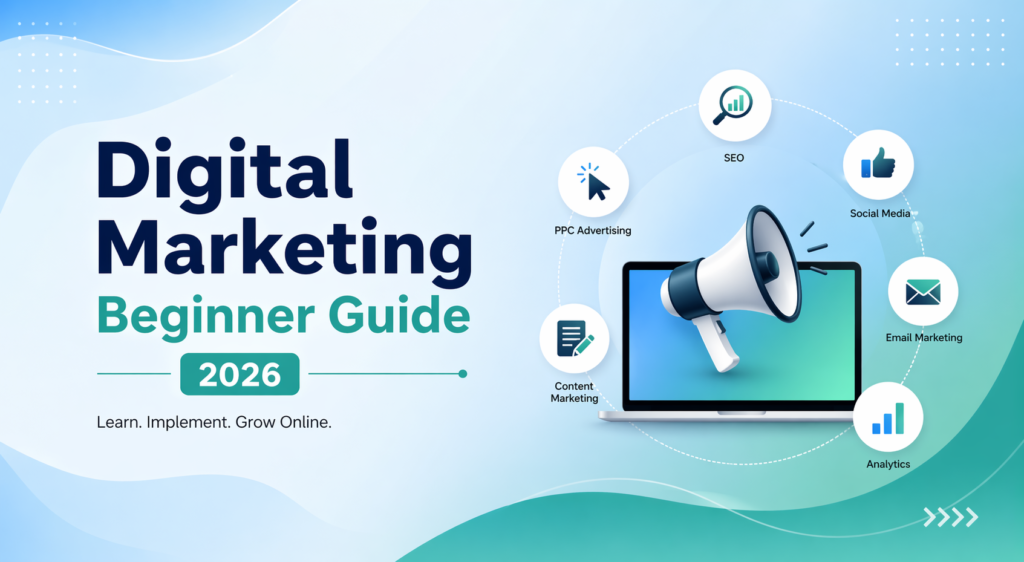
What is Digital Marketing? Complete Beginner Guide (2026)
Introduction
Digital marketing is one of the fastest-growing industries in today’s online world. In 2026, every business—whether small or large—is using digital marketing services to grow and reach more customers.
If you are wondering what is digital marketing in simple words, this beginner guide will help you understand everything—from basics to advanced concepts.
What is Digital Marketing?
Digital marketing refers to promoting products or services using online platforms like search engines, social media, websites, and mobile apps.
In simple words, digital marketing means online marketing where businesses connect with customers through the internet.
Examples of digital marketing include:
- Google search results (SEO)
- Instagram and Facebook ads
- YouTube videos and ads
- Email marketing campaigns
- WhatsApp marketing messages
- Blog posts on websites
- Influencer promotions on social media
- Google Ads (paid search ads)
Understanding what is digital marketing is the first step for beginners who want to build a career or grow a business online.
Why Digital Marketing is Important in 2026
The importance of digital marketing has increased rapidly in recent years. In 2026, most customers search online before making any purchase decision.
Here’s why digital marketing is important in 2026:
1. Online Presence is Necessary
Every business today needs a strong online presence to survive and grow. Customers no longer depend only on offline stores—they search on Google, check social media, and visit websites before making decisions. If your business is not visible online, you are missing a large number of potential customers. A website and active social media profiles help build trust and make your brand more accessible.
2. Targeted Marketing
One of the biggest advantages of digital marketing is targeted marketing. Unlike traditional methods, you can show your ads only to people who are interested in your product or service.
For example, you can target users based on:
- Age group
- Location
- Interests
- Online behaviour
This increases the chances of conversions and reduces waste of money.
3. Cost-Effective Strategy
Digital marketing is much more cost-effective compared to traditional marketing like TV ads, newspapers, or billboards. Even with a small budget, businesses can run ads on platforms like Google and Facebook and reach thousands of people. This makes it especially useful for Startups and small businesses.
4. Measurable Results
With digital marketing, everything is measurable. You can track:
- Number of visitors
- Clicks on ads
- Engagement on social media
- Conversion rates
Tools like Google Analytics and Meta Ads Manager help you analyse performance and improve your strategy based on real data.
5. High Growth Opportunities
Businesses that use digital marketing services for small businesses often grow faster than those that rely only on offline methods.
Digital platforms provide opportunities to:
- Reach a wider audience
- Generate leads consistently
- Scale marketing efforts quickly
This helps businesses expand and compete even with larger companies.
Types of Digital Marketing
To fully understand types of digital marketing, let’s explore the main methods:
1.Search Engine Optimization (SEO)
Search Engine Optimization (SEO) is one of the most important components of digital marketing, especially for beginners. It helps your website rank higher on search engines like Google and drives organic traffic without the need for paid advertisements.
Keywords used: SEO, search engine optimization, website ranking
Benefits of SEO
- Generates free organic traffic
- Improves online visibility
- Builds long-term growth and sustainability
Types of SEO
To understand search engine optimization more effectively, it is divided into three main categories:
1. On-Page SEO
On-page SEO refers to all the optimizations performed within your website to improve its search engine rankings.
It includes:
Using relevant keywords naturally in the content
Writing SEO-friendly titles and headings
Optimizing images with proper ALT text
Adding internal links between pages
Creating high-quality and valuable content
On-page SEO helps search engines understand your content and improves user experience.
2. Off-Page SEO
Off-page SEO involves activities performed outside your website to improve its authority and credibility.
It includes:
- Building high-quality backlinks
- Sharing content on social media platforms
- Guest posting on other websites
- Getting mentions from influencers or other sites
Off-page SEO increases your website’s trust and helps improve its ranking on search engines.
3. Technical SEO
Technical SEO focuses on optimizing the technical structure of your website to enhance its performance and usability.
It includes:
- Improving website loading speed
- Ensuring mobile-friendly design
- Fixing broken links and errors
- Creating XML sitemaps and robots.txt files
- Securing the website with HTTPS
Technical SEO ensures that search engines can easily crawl, index, and rank your website.
2. Social Media Marketing
Social media marketing involves promoting your business on platforms like:
This is one of the most popular digital marketing strategies today.
Benefits:
- Build brand awareness
- Increase engagement
- Connect with audience
3. Pay-Per-Click Advertising (PPC)
PPC is a paid form of online marketing where you pay for each click.
Examples: Google Ads, Facebook Ads
Benefits:
- Instant traffic
- Lead generation
- High ROI
4. Content Marketing
Content marketing is a key part of SEO and digital marketing.
It includes:
- Blog writing
- Videos
- Infographics
Benefits:
- Build trust
- Improve SEO ranking
- Attract audience
5. Email Marketing
Email marketing is one of the oldest yet effective digital marketing services.
Benefits:
- Direct communication
- High conversion rate
- Cost-effective
6. Affiliate Marketing
In affiliate marketing, you earn commission by promoting products online.
7. Influencer Marketing
Brands collaborate with influencers to promote products on social media.
How Does Digital Marketing Work?
To understand how digital marketing works, follow these steps:
- Identify target audience
- Choose platform (Google, Instagram, etc.)
- Create content or ads
- Promote products or services
- Track results and optimize
This process is used in almost every digital marketing strategy.
Benefits of Digital Marketing
Here are the main benefits of digital marketing:
Global Reach
You can reach customers worldwide.
Better Engagement
Direct interaction with customers.
Higher Conversion Rate
More chances to turn visitors into customers.
Brand Awareness
Build a strong online brand.
Flexibility
Easily change strategies anytime.
Digital Marketing for Small Businesses
Digital marketing for small businesses is very powerful because it requires low investment and gives high returns.
Small businesses can use:
- Local SEO
- Social media marketing
- Google Business Profile
Using the right digital marketing services, small businesses can compete with bigger brands.
Latest Digital Marketing Trends in 2026
To stay ahead in digital marketing in 2026, follow these trends:
AI in Digital Marketing
Automation and AI tools are changing marketing strategies.
Short Video Content
Reels and short videos are dominating.
Voice Search Optimization
People use voice search more than typing.
Personalized Marketing
Content tailored to user preferences.
Common Mistakes Beginners Should Avoid
- Ignoring SEO
- Not using keywords properly
- Posting inconsistent content
- Not analysing performance
- Focusing only on selling
How to Start Digital Marketing as a Beginner
If you are new to digital marketing for beginners, follow these steps:
- Learn basics of digital marketing
- Choose a niche
- Create social media profiles
- Build a website
- Start content creation
- Learn SEO and ads
- Practice regularly